

Jul 21, 2025·8 min
How to Build a Restaurant Website That Wins Local SEO
Learn how to build a restaurant website that ranks in local search: structure, on-page SEO, Google Business Profile, reviews, schema, and tracking.
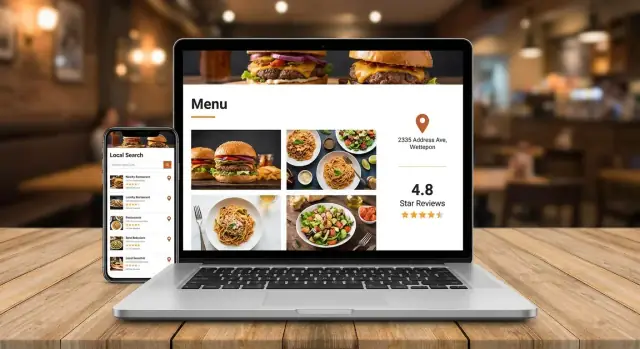
Learn how to build a restaurant website that ranks in local search: structure, on-page SEO, Google Business Profile, reviews, schema, and tracking.
Local SEO isn’t just “getting traffic”—it’s getting the right people to take the next step. Before you design pages or write content, decide what a successful visit looks like for your restaurant.
Pick one primary goal and 1–2 secondary goals. For most restaurants, the primary goal is more calls, reservations, and walk-ins—not newsletter signups.
Examples of high-value actions:
Write down your top service areas so your site can naturally support them later:
This keeps your targeting realistic and helps prevent awkward, spammy wording across the site.
Most local restaurant searches map to a few predictable intents:
Make sure each intent has a clear, easy action—especially on mobile.
Choose metrics that match real revenue, not vanity numbers:
If you already have analytics set up, create a simple monthly report (even a spreadsheet is fine). You’ll use these benchmarks to decide what to improve next, rather than redesigning based on guesswork.
Your site structure is the “map” both customers and Google follow. A clear, predictable structure helps diners find what they need in a few taps—and helps search engines understand which pages deserve to rank for local queries.
For most restaurants, a short menu of top-level pages works best:
This keeps your navigation mobile-friendly and prevents important pages from getting buried under dropdowns.
If you have one address, a single dedicated Location page is often enough. It should include your full address, hours, phone, directions, parking notes, and links to reservations/ordering.
If you have multiple restaurants, create:
Each location page should be reachable in one or two clicks from the homepage, not hidden in the footer.
Add extra pages when there’s real demand and a clear search intent:
These pages can attract high-value local searches and reduce confusion (for example, event inquiries going to your general contact form). If a page won’t be maintained, don’t create it—thin, outdated pages can hurt trust.
Aim for clean, readable URLs like:
Then link to key actions from multiple places (Home → Menu, Location → Reservations). A small structure done well beats a sprawling site every time.
Before you touch a page builder or hire a designer, gather the basics that search engines (and customers) rely on. This prep work makes your restaurant website SEO efforts smoother because you’re not scrambling for details or redoing pages later.
Collect your NAP: name, address, phone exactly as it appears on your signage, receipts, and online listings. Pick one “official” format and stick to it across your site, Google listings, and directories.
Small inconsistencies can hurt restaurant NAP consistency—for example, “St.” vs “Street,” different suite numbers, or mixing multiple phone numbers across platforms. Decide your standard now so every page (especially Contact and Location pages) matches.
Have these ready in a single doc so they’re easy to paste into pages:
These details improve usability and help with local SEO for restaurants because they reduce confusion, increase conversions, and support accurate local listings.
Collect a small but strong set of images that reflect the real experience:
Name your files clearly (e.g., restaurant-name-city-patio.jpg) and keep them organized. Consistent, authentic photos also support click-through from local results.
Choose one primary reservation path and make it consistent across the website:
If you use a third-party platform, decide whether you’ll link out from buttons like “Reserve” or embed a widget. The key is clarity: one obvious action reduces drop-off and helps your pages align with “book a table near me” intent.
If you’re building or rebuilding the site from scratch, a structured setup also makes it easier to stay consistent at scale—especially for multi-location brands. For example, teams using a vibe-coding platform like Koder.ai can quickly generate repeatable page templates (menu, locations, events) from a checklist, then export source code and keep details like NAP and hours standardized across pages.
Once you have these assets and decisions finalized, building pages becomes faster—and your site is less likely to launch with missing info that weakens trust and local search performance.
Your homepage is often the first page people (and Google) see, so it should communicate the essentials in seconds. Aim to answer three questions immediately: what you serve, where you are, and what the visitor should do next.
At the top of the page, include your restaurant name plus a clear descriptor like “Thai street food in East Austin” or “Neapolitan pizza in Downtown Portland.” Reinforce it with your full address and neighborhood (not just a city name), so local intent is unambiguous.
On mobile, most visitors want one of three actions: call, get directions, or view the menu. Make click-to-call and directions prominent and persistent (for example, in a sticky header).
Keep buttons short and specific: “Call,” “Directions,” “View Menu.” If you take reservations or online orders, include those as secondary actions—visible, but not competing with the core local actions.
Local searchers look for reassurance. Add a small, honest set of trust elements near the top:
Avoid generic stock photos. Use your own images of signature dishes, the dining room, and the exterior (helpful for “I’m here—am I at the right place?” moments).
Name image files descriptively and keep captions practical (e.g., “Margherita pizza from our Midtown location”). This supports both trust and relevance without overloading the page.
A PDF menu is convenient to upload, but it’s a weak foundation for restaurant website SEO. Search engines can struggle to understand the content, customers can’t easily scan it on mobile, and you lose chances to rank for specific dishes.
Create a real web page (HTML) for your menu so it can be crawled and indexed like any other page. If you still want to offer a PDF for printing, treat it as a secondary option and link to it from the main menu page.
Use a clean structure:
This helps with menu SEO because you can naturally include terms people search for (e.g., “gluten-free pasta,” “kids burger,” “vegan dessert”) without stuffing keywords.
Your menu is one of your most visited pages—use it to guide people and distribute internal link value:
Keep links subtle (one short link per relevant category is usually enough).
Menus change. To avoid outdated info, add a simple note like “Prices may vary by location” or “Seasonal availability.” If pricing changes often, consider showing price ranges for certain items or keeping volatile items in a “Market Price” section.
Finally, make sure the menu page loads fast, is readable on mobile, and uses real text (not images of text). That combination supports local SEO for restaurants and makes ordering decisions quicker.
If you have more than one restaurant, don’t squeeze all addresses onto a single “Locations” page and hope Google sorts it out. Create a dedicated page for each address so people (and search engines) can clearly match a search like “tacos near Capitol Hill” to the right restaurant.
Start with the basics, then add the details that help customers choose you quickly:
Each page needs its own text. Reusing the same paragraph across all locations can dilute relevance and makes it harder to rank locally. Mention what’s around you and what guests commonly visit before/after dining.
Work in local terms where they fit, such as neighborhood + cuisine + restaurant (e.g., “Italian restaurant in River North”). Keep it readable—write for customers first, and let SEO follow.
Local SEO starts with knowing how people actually search when they’re hungry—and then giving each intent a clear “home” on your site.
Start with three buckets:
Pull ideas from Google autocomplete, “People also ask,” competitor pages, and your own order history (what people call your dishes vs. what you call them).
One page should lead for one primary intent:
Avoid repeating the same primary keyword across multiple pages—Google may not know which one to rank.
For each main page, write a unique title tag and meta description that includes the location and a clear value hook.
Example:
Use an H1 that matches the search intent (e.g., “Brunch in Capitol Hill”) and H2s for supporting topics customers look for (hours, parking, popular dishes, dietary options).
Schema markup is a small piece of structured data that helps search engines understand what your restaurant is, where it is, and what customers can do on your site (like view a menu or make a reservation). It won’t magically rank you overnight, but it can improve how clearly your pages are interpreted and may unlock richer search features.
For restaurants, start with Restaurant (or LocalBusiness if your setup is broader). Add it to the pages where it fits naturally—typically your homepage and/or each location page.
At a minimum, mark up:
If your site supports it, also include:
FAQ schema is fine when the page includes real questions and answers customers actually read (parking, dietary options, dress code, corkage, etc.). Don’t add it to thin “SEO FAQs” or duplicate questions across every page—keep it honest and page-specific.
After implementing schema, run the page through Google’s Rich Results Test and fix warnings/errors. Focus on accuracy over volume: incorrect hours or mismatched addresses can create confusion rather than benefits.
If you’re updating templates, document what you marked up so it stays consistent when the menu, hours, or reservation links change.
Your Google Business Profile (GBP) often shows up before your website does—especially on mobile. Treat it like your “front door” on Google: it should clearly confirm who you are, where you are, and what a customer can do next.
Start by claiming and verifying your Google Business Profile. Verification reduces the risk of edits from random users and unlocks features like posts and messaging.
Then make sure your NAP (Name, Address, Phone) matches your website exactly—character for character. Even small differences like “St.” vs “Street” can create confusion for search engines and customers.
If you have multiple locations, each one needs its own profile that matches its own location page and contact details.
Pick the most accurate primary category (e.g., “Italian restaurant,” “Sushi restaurant”) and add a few relevant secondary categories—don’t stuff them.
Fill out attributes and services that influence decisions and searches:
These fields help you appear for specific “near me” intents and set expectations before someone clicks.
Upload high-quality photos regularly: exterior (so people recognize the entrance), interior, signature dishes, menu boards, and team shots.
Aim for clarity over perfection—new, real photos tend to build trust and engagement.
Use GBP Posts for specials, events, or seasonal menus. Even one post per week keeps the profile feeling maintained.
Most importantly, keep hours accurate and set holiday hours ahead of time. Incorrect hours lead to negative reviews, which can hurt conversions even when rankings are fine.
For cleaner alignment between GBP and your site, link GBP to the most relevant pages (homepage for single-location, or the specific location page for multi-location).
Reviews are one of the clearest trust signals for local search. They influence how often people click, call, and book—and they create fresh, location-specific language (dish names, neighborhoods, service details) that search engines and customers both understand.
The best system is the one your team will actually use. Pick one moment to ask, and keep it consistent:
On your site, create a lightweight page like /reviews that offers two or three options (Google, Yelp, TripAdvisor—whatever matters for your area). Avoid sending people through a maze.
Replying shows activity and care. It also helps convert hesitant visitors who are reading reviews to decide.
For positive reviews, thank them and mention something specific (“We’re glad you loved the lamb kebab”).
For negative reviews, keep the same structure every time: acknowledge, apologize if appropriate, state what you’ll do, and move it offline (“Please contact us at… so we can make it right”). Don’t argue, don’t blame, and don’t paste the exact same reply each time.
Displaying reviews can lift conversions, but it needs to be honest:
If you embed a feed or add testimonials, keep the content accurate and up to date—fake-looking review sections hurt trust fast.
A dedicated /reviews page also helps customers find the right place to leave feedback. Link to it from your footer and Contact page, and consider adding it to your main navigation if reviews are a major driver for your restaurant.
Technical SEO is the “plumbing” that lets your content and local signals actually show up (and load fast) on phones. For restaurants, speed and usability matter because most visitors are hungry, in a hurry, and on mobile data.
Start by improving Core Web Vitals with image and script discipline:
A quick win is to prioritize the content people need immediately: location, hours, call button, and the menu link.
Mobile-first doesn’t just mean “responsive.” It means:
Use SSL (HTTPS) everywhere, keep clean URLs (e.g., /menu, /locations/downtown), and generate an XML sitemap so search engines discover updates quickly. If your platform supports it, submit the sitemap in Search Console.
Restaurants often create near-identical pages (multiple “menu” versions, tag pages, printer-friendly copies). Consolidate duplicates with canonical URLs when possible.
If you must keep thin or utility pages (e.g., internal search results, filter pages), block them from indexing via noindex settings so they don’t compete with your important pages.
Local SEO isn’t “set it and forget it.” The restaurants that keep climbing are the ones that treat their website and listings like a living system—measuring what guests actually do, then making small improvements every month.
Prioritize actions that put diners in seats:
If your reservation system lives on a third-party domain, track clicks to it as a goal. The point is to measure intent, not just pageviews.
Set up Google Search Console to see which queries you appear for, which pages get clicks, and where impressions are high but clicks are low (often a sign your title/description needs work).
Pair that with analytics (GA4 or similar) to understand:
When a page gets traffic but no actions, it usually needs clearer CTAs, better menu clarity, or more location-specific details.
If you want cleaner reporting, add UTM parameters to key Google Business Profile links (website, reservations, menu). That way you can separate “GBP traffic” from other sources in analytics.
Once a month, review:
Small, consistent iterations beat rare big redesigns—especially for local SEO.
Start with one primary conversion and 1–2 secondary actions.
Design every key page (Home, Menu, Location) so the primary action is obvious on mobile (sticky buttons help).
List the exact places you want to show up for and keep it realistic.
Use this list to guide location-page copy and internal links, instead of stuffing every page with awkward city names.
Keep the top navigation short and action-focused:
If you have multiple locations, add a Locations hub that links to one page per location (ideally reachable in 1–2 clicks from the homepage).
Keep your Name, Address, Phone (NAP) identical everywhere—on your site, Google Business Profile, and directories.
Practical tips:
Use a real HTML page for your menu so it’s crawlable, readable on mobile, and searchable for dish terms.
Best practice:
Each location page should make the decision easy and remove friction:
Link to these pages from /locations and prominent site areas—not just the footer.
Map one primary intent to one page so your pages don’t compete with each other.
Example mapping:
Then write unique title tags and H1s that match the intent (and include the location where relevant).
Start with Restaurant (or LocalBusiness) schema on the homepage and/or each location page.
At minimum, mark up:
Validate with Google’s Rich Results Test and prioritize accuracy—incorrect hours or addresses can backfire.
Treat GBP like a “mini homepage” that needs to match your website.
Focus on:
For multi-location businesses, ensure each profile links to the correct corresponding location page (e.g., /locations/downtown).
Track actions tied to real revenue, then review monthly.
Good restaurant metrics:
Use Search Console to spot pages with high impressions but low clicks (optimize titles/descriptions), and analytics to find pages getting traffic but not actions (improve CTAs, clarity, and location details).